://custom dashboards / digital displays
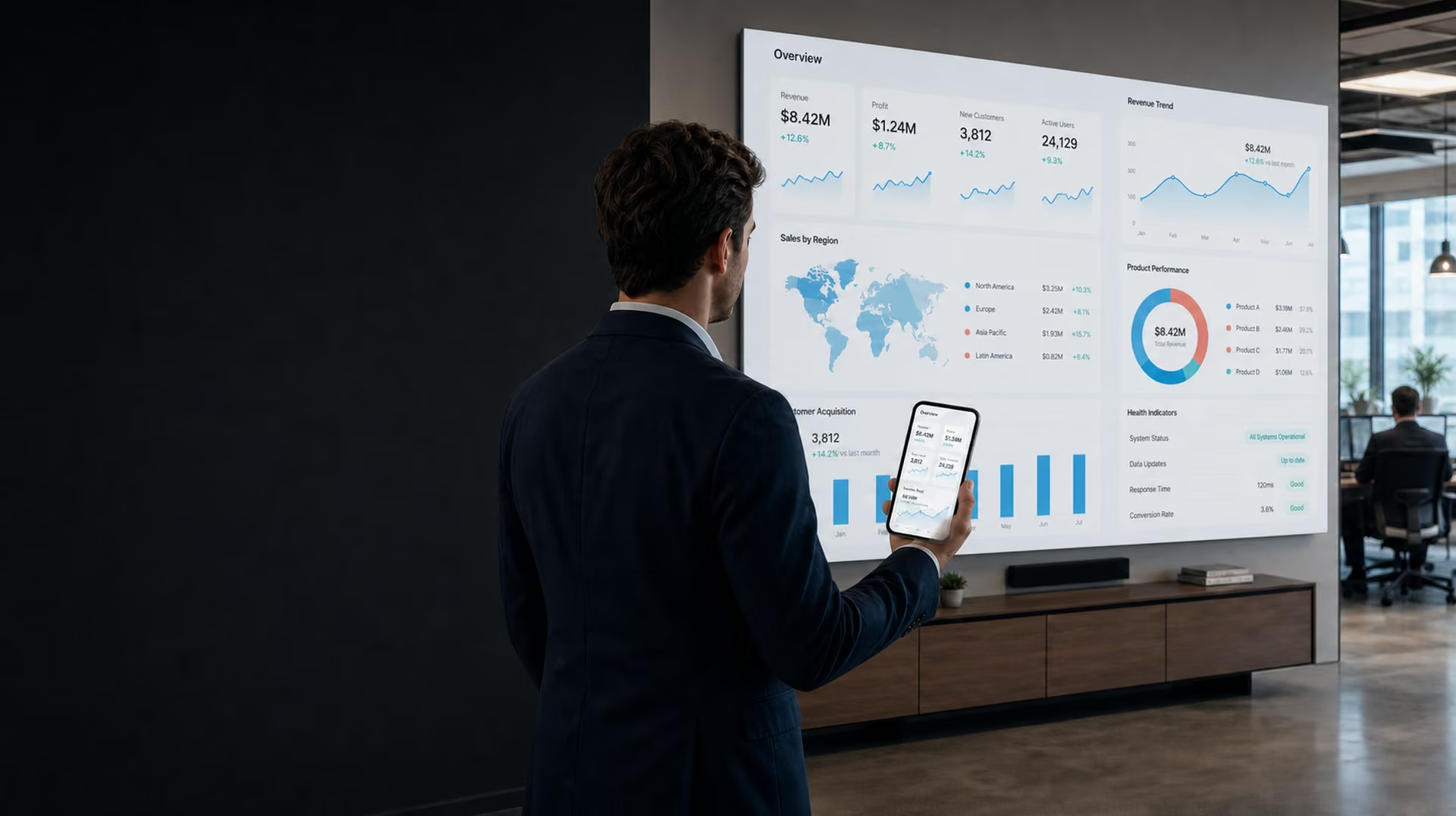
Your business already has the data. Put it on the wall. Put the same live view on a video wall, the desktop you start every morning, a tablet beside your desk or the phone in your hand. We design dashboards around the decisions people make—not around the size of one screen.
://the whole system
Your screens deserve better than a slideshow. The hard part is rarely the panel. It is connecting the data, making the information legible from across the room, specifying the right hardware, finding qualified vendors and making sure the installation follows the design. That is the complete job.
01 / your data Not somebody else’s template. ERP, booking, warehouse, calendar, CRM, machine protocol, database or spreadsheet: if the operation runs on it, we can put it on the wall.
02 / one project No per-screen monthly rent. Our software, integration, specification and oversight are scoped as one build. Hardware and physical installation come from qualified vendors we help select and direct. Optional care is flat by site, not a meter attached to every display.
03 / full ownership The client owns the system. You receive the configuration, software and documentation. The system keeps working if you choose not to retain us.
01 Discover Audit the room, people and data. EUR 490–990, credited to the build.
02 Design Prototype the decisions, visual system and real-data states at viewing distance.
03 Build + coordinate Connect and stage the system, then oversee a qualified installer mounting, cabling and testing every endpoint to our specification.
04 Own + operate Training, source, recovery notes and optional flat-rate care from EUR 99–399 per site.
single screen EUR 2,500–6,000
floor / 3–10 screens EUR 8,000–25,000
multi-site rollout from EUR 25,000
Rough estimate only. These ranges are orientation, not a quote. A fixed price requires the full scope: screens and devices, data sources, integrations, environment, installation, locations, support and deadline.
01 Production data where decisions happen.
Manufacturing Live OEE, Andon, safety and shift-handover boards connected to the systems already running the floor.
more information → what it is
Line dashboards can show output against target, OEE, cycle time, scrap, first-pass yield and live downtime. Andon boards escalate stoppages in seconds; safety and handover boards keep the whole shift working from the same truth.
Production data where decisions happen. One useful decision, readable in seconds. where it works
Production cells, supervisor offices, line ends, time clocks, entrances and plant-wide emergency channels. Refresh rates match the decision: seconds for downtime, minutes for OEE, daily for safety.
data + tech stack
MES and ERP systems including SAP; OPC UA, Modbus, Siemens S7 and MQTT at machine level; Power BI, Tableau or Grafana; plus the Excel and Google Sheets planners still maintain. On-premise operation is available.
how it gets built
We walk the floor with shift leads, map sources and sightlines, prototype with real data, workshop the complete kit, then coordinate a qualified installer during the operational window. We oversee delivery against the specification; documentation, admin training and recovery behavior are part of handover.
typical investment
A single line dashboard is typically EUR 2,000–5,000. A four-to-six-screen hall with custom integration is usually EUR 15,000–40,000. Plant and multi-site rollouts are scoped around environment, data and installation.
Rough estimate only; a fixed quote requires the full project scope. ownership + residency
Designed for full client data ownership, with deployment and data residency matched to the required country, region or internal environment.
illustrative scenario — not a client claim
Illustrative scenario — A machining shop replaces weekly exports with six live screens: four production boards, one OPC-UA Andon display and one SAP-fed handover screen. A vendor-coordinated two-day weekend installation puts every stoppage in sight without introducing a per-screen software meter.
put your data on the wall → 02 The warehouse already knows. Let the floor see it.
Warehouse + logistics Dock schedules, pick progress, inventory exceptions and yard status made visible to crews, drivers and dispatch.
more information → what it is
One shared view can show wave and pick progress, door assignments, carrier arrivals, delays, trailer locations, safety milestones and low-stock exceptions. The screen becomes a live operating surface, not a report from yesterday.
The warehouse already knows. Let the floor see it. One useful decision, readable in seconds. where it works
Loading doors, dispatch, driver waiting areas, guard shacks, pick zones and outdoor yards. Local caching keeps the last good state visible through a network interruption and catches up after reconnect.
data + tech stack
WMS, TMS, dock-scheduling and yard-management systems through APIs, webhooks or a middle database; gate check-in flows; HR and safety records; and properly connected spreadsheets for smaller operations.
how it gets built
Discovery follows the movement of freight and people, then defines who needs which decision at each screen. We build and test the connectors, specify indoor or high-brightness outdoor hardware, source a qualified vendor and oversee installation, training and handover.
typical investment
A single fulfillment or safety board is typically EUR 2,000–5,000. Four-to-eight dock displays plus a guard board usually run EUR 12,000–30,000. Warehouse and outdoor-yard systems commonly land between EUR 25,000 and 60,000.
Rough estimate only; a fixed quote requires the full project scope. ownership + residency
Designed for full client data ownership, with deployment and data residency matched to the required country, region or internal environment.
illustrative scenario — not a client claim
Illustrative scenario — A fourteen-door freight operation replaces a shared appointment sheet with driver arrival, door assignment and dispatch displays fed by its TMS. Drivers and dock crews see one status model, reducing calls and detention without a license on every screen.
put your data on the wall → 03 Menus that update themselves and sell on purpose.
Restaurants + food service Dayparted menus, allergen information, order status and drive-through displays connected to real operating data.
more information → what it is
Branded menu arrays can switch breakfast, lunch and dinner automatically, mark sold-out items, carry EU allergen data, promote high-value specials and show order-ready status without a staff member rebuilding slides.
Menus that update themselves and sell on purpose. One useful decision, readable in seconds. where it works
Cafés, fast-casual counters, food halls, multi-location groups and drive-through lanes. Head office can protect the brand while each location receives only the controls it actually needs.
data + tech stack
POS systems such as Toast and Square, kitchen and order systems, menu master data, nutrition and allergen sources, campaign calendars and spreadsheets. A price changes once at the source and follows the item everywhere.
how it gets built
We audit the menu, dayparts, brand rules and service flow; prototype at real viewing distance; connect live pricing and availability; workshop the players and panels; then coordinate a qualified installer outside peak service and train the people who own updates.
typical investment
A total project budget for two or three indoor café boards is typically EUR 3,000–6,500, including vendor-supplied hardware and installation. Fast-casual arrays with order status run EUR 5,500–12,000. Drive-through systems start around EUR 8,000–16,000 per lane.
Rough estimate only; a fixed quote requires the full project scope. ownership + residency
Designed for full client data ownership, with deployment and data residency matched to the required country, region or internal environment.
illustrative scenario — not a client claim
Illustrative scenario — A two-location bowl concept replaces reprinted panels with three dayparted boards at each site. Prices, specials and the fourteen regulated allergen markers update from one source, while local teams keep their hands off the layout.
put your data on the wall → 04 Screens guests notice, wired to systems staff already use.
Hotels + hospitality Lobby welcomes, conference wayfinding, room schedules and food-and-beverage displays composed as one property system.
more information → what it is
A property can welcome arriving groups, direct conferences, publish meeting-room status, surface weather and local information, and run restaurant menus from one coherent visual language.
Screens guests notice, wired to systems staff already use. One useful decision, readable in seconds. where it works
Lobby walls, reception, meeting-room entrances, lifts, conference routes, restaurants and outdoor arrival areas. Multi-property groups get a locked design system with carefully scoped local editing.
data + tech stack
PMS platforms such as Opera, Mews and Cloudbeds; Cvent and banquet-event information; Microsoft 365 and Google calendars; restaurant POS and menu sources; and, where useful, access-control systems.
how it gets built
We map the complete guest journey and the staff workflows behind it, create the property design system, build integrations, stage every endpoint off-site, then oversee a qualified installer working around occupancy and conference schedules.
typical investment
Meeting-room and wayfinding packages usually run EUR 6,000–15,000. A complete 2×2 lobby wall is typically EUR 15,000–35,000. Full-property systems commonly land between EUR 30,000 and 80,000.
Rough estimate only; a fixed quote requires the full project scope. ownership + residency
Designed for full client data ownership, with deployment and data residency matched to the required country, region or internal environment.
illustrative scenario — not a client claim
Illustrative scenario — A 120-room hotel replaces printed schedules with a lobby welcome wall, eight meeting-room panels and two restaurant boards. PMS, calendar and kitchen data stay in their native systems while guests see one current answer.
put your data on the wall → 05 Your lobby speaks before reception does.
Corporate lobbies Visitor welcomes, company stories, recognition and live performance information without the generic signage template.
more information → what it is
A lobby system can welcome today’s visitors, present news and achievements, recognize employees, surface selected KPIs and switch immediately to priority or emergency messaging.
Your lobby speaks before reception does. One useful decision, readable in seconds. where it works
Reception desks, entrance walls, employee commons, elevator landings, visitor kiosks and multi-screen recognition installations. Layouts are designed to read at the actual distance and pace of the room.
data + tech stack
Visitor management, Microsoft 365 and Google Calendar, HR systems, CRM and BI layers including Power BI, Tableau and Looker, plus Excel or Google Sheets where those remain the honest source.
how it gets built
We establish what the room should say, what can update itself and who may change it. Then we design, connect and stage the system, source the right vendor, and oversee installation and handover against one specification.
typical investment
A professional single-screen lobby setup is generally EUR 2,000–5,000. Recognition walls and multi-screen reception zones typically range from EUR 8,000 to 20,000, with larger architectural displays scoped separately.
Rough estimate only; a fixed quote requires the full project scope. ownership + residency
Designed for full client data ownership, with deployment and data residency matched to the required country, region or internal environment.
illustrative scenario — not a client claim
Illustrative scenario — A reception zone combines scheduled visitor welcomes, an employee-recognition wall and a small set of live business measures. Each source remains authoritative; the lobby no longer depends on somebody remembering to export a slide.
put your data on the wall → 06 Calmer waiting rooms, with privacy designed in.
Healthcare + clinics Anonymous queue status, wayfinding, education and staff-only operating views that can remain fully on premise.
more information → what it is
Public screens show ticket numbers, directions, delay information and useful education without exposing patient names. Back-of-house views can show room occupancy, running delays and the information staff need to coordinate care.
Calmer waiting rooms, with privacy designed in. One useful decision, readable in seconds. where it works
Waiting rooms, reception, stairwells, corridors, treatment zones and staff areas across one clinic or a standardized multi-location group.
data + tech stack
Practice-management and check-in systems, anonymized at the source; EMR or room calendars; ticket printers; and a simple approved content editor. EU deployments can keep all data on the clinic network.
how it gets built
Privacy and accessibility enter at discovery, not after design. We document the data flow, prototype readable states, validate with operational staff and the data-protection owner, stage the kit, then oversee the selected installer and train the operating team.
typical investment
A waiting-room screen with queue integration generally runs EUR 5,000–12,000. A multi-room clinic with wayfinding, public information and a staff board typically lands between EUR 15,000 and 35,000.
Rough estimate only; a fixed quote requires the full project scope. ownership + residency
Designed for full client data ownership, with deployment and data residency matched to the required country, region or internal environment.
illustrative scenario — not a client claim
Illustrative scenario — Four clinics share one standardized kit for anonymous queue status and wayfinding, with staff-only occupancy boards on the private network. Each site receives scoped control and the public display never receives a patient identity.
put your data on the wall → 07 Screens that sell, under your control.
Retail Campaigns, pricing, window displays and queue information kept current across one store or a whole estate.
more information → what it is
Retail displays can carry scheduled campaigns, live prices and promotions, window creative, queue status and local messages. Brand-locked templates protect the system while permitted store-level overrides keep it relevant.
Screens that sell, under your control. One useful decision, readable in seconds. where it works
Windows, entrances, departments, feature walls, tills, pickup counters and multi-site networks. High-brightness and portrait hardware is selected for the actual light, duty cycle and service access.
data + tech stack
POS and merchandise systems for price and availability, marketing calendars for campaigns, counter or ticketing systems for queues, and a central content layer with role-based permissions.
how it gets built
We inventory locations and existing screens, define the central/local permission model, build the shared design system and data integrations, pilot in one store, then package a repeatable installation and support plan.
typical investment
A two-to-four-screen store with central control and POS integration typically runs EUR 8,000–20,000. Larger deployments combine a shared software build with hardware and installation commonly budgeted at EUR 800–2,500 per location.
Rough estimate only; a fixed quote requires the full project scope. ownership + residency
Designed for full client data ownership, with deployment and data residency matched to the required country, region or internal environment.
illustrative scenario — not a client claim
Illustrative scenario — A regional fashion group launches one campaign to every window while stock-sensitive product tiles update from the merchandise system. Store managers can add an approved local message without changing the master design.
put your data on the wall → 08 The numbers the team needs, on the wall, live.
Call centers + sales floors Readable queue, SLA, backlog and leaderboard wallboards built around action instead of dashboard decoration.
more information → what it is
Support floors can see calls waiting, longest wait, available agents, SLA by queue and ticket backlog. Sales teams can see current performance, targets and achievements—with restraint so the board reads in three seconds.
The numbers the team needs, on the wall, live. One useful decision, readable in seconds. where it works
Support centers, sales floors, team-lead rooms and multi-site operations. Different roles can receive different views while sharing the same governed data model.
data + tech stack
Cisco, Avaya, Genesys, Amazon Connect and other CCaaS platforms; Zendesk; Salesforce, HubSpot, Dynamics, Pipedrive and Close. Queue data can refresh in seconds and backlog in minutes.
how it gets built
We work with team leads and agents to identify the measures that change behavior, build and validate the connectors, design for long viewing distance, stage the system, coordinate the qualified installer and document every source and recovery path.
typical investment
A one-to-three-screen call-center wallboard project generally runs EUR 6,000–15,000. A CRM-connected sales leaderboard starts around EUR 5,000. Multi-floor and multi-site systems scale from the shared connector and design layer.
Rough estimate only; a fixed quote requires the full project scope. ownership + residency
Designed for full client data ownership, with deployment and data residency matched to the required country, region or internal environment.
illustrative scenario — not a client claim
Illustrative scenario — A 35-seat support center replaces morning exports with five live wallboards combining telephony and ticket data. The design deliberately limits each view to the few numbers that trigger an immediate response.
put your data on the wall → data ownership + residency
Your data does not have to leave with the vendor. Every system can be designed for full data ownership, client-controlled credentials and compliance requirements. Data residency can be planned for a specific country or region, or for internal systems where policy requires the information to remain inside your own environment.
physical systems + oversight
The software and the room follow the same specification. With 30 years in technical events and installations, FrameShift can design and specify the required hardware, source qualified vendors and oversee the selected installer through delivery and acceptance. We do not sell the hardware and we do not install it ourselves; we make sure the people who do deliver it correctly to the FrameShift specification.
://fixed scope / vendor neutral / built to hand over
Tell us what belongs on the wall. A 30-minute conversation is enough to establish the likely system, risks and project range.
book a discovery call →